
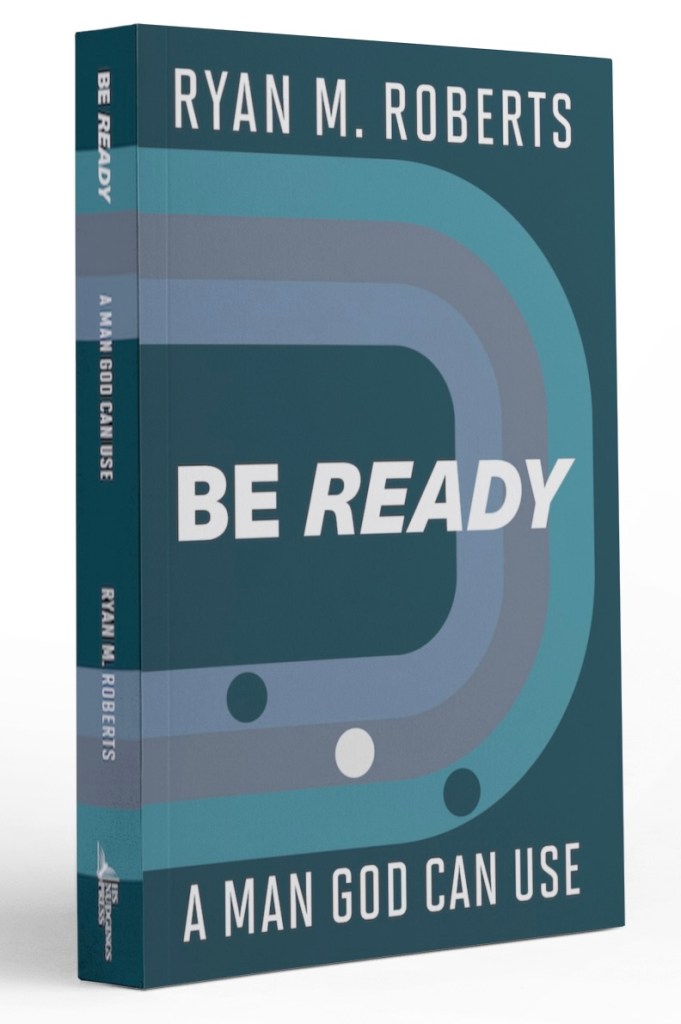

[The following reflection originally appeared in my book, Be Ready: A Man God Can Use.]
It does flow with milk and honey!… But the people who live there are powerful…
— Numbers 13:27–28, NIV
I sat across from a man who genuinely wanted his life to be different. There was no pretense in him. He loved his family. He knew what mattered. But as he talked, something kept surfacing—quietly. “I want to be a better husband.” Then he hesitated. “But… I don’t know where to start.”
I’ve heard it in others too. “I want to be closer to God… but I don’t have time.” “I want to lead my family… but I’m not sure I can.” Different men. Same word. They feel the weight of it. But every step toward what they know is right meets resistance—and that resistance finds its way into one small word—but.
It’s not loud. It doesn’t sound like rebellion. It sounds reasonable. Over time, it becomes a place a man settles—a way of explaining why he hasn’t moved, why he’s stalled, why the life he senses God calling him to still feels out of reach.
That word shows up at a critical moment in Scripture. In Numbers 13, Israel stands on the edge of what God had promised. They had seen His power. They had been led, fed, and carried. Now they see the land itself. “It does flow with milk and honey! Here is its fruit.” It’s all true.
Then the sentence turns. “But the people who live there are powerful, and the cities are fortified and very large.”
Nothing they said was false. The land was good. The obstacles real. The problem was not in the facts—it was in what they did with them. That one word became a hinge. On one side was the promise of God. On the other was what they could see and fear. Without saying it outright, they let the “but” decide which voice would carry more weight.
We do the same. We hear God call us forward—toward integrity, leadership, holiness—and something in us agrees. We want it. We see it. Then comes the hesitation: I know what God is calling me to… but. Over time, that word becomes a boundary.
Caleb stood in that same moment. He saw the same land, the same giants, the same walls. He didn’t deny reality—but refused to let it outrank what God had said. “We should go up and take possession of the land, for we can certainly do it.” Not because the obstacles were small—but because God was not.
That is where holiness begins—not in a man with no obstacles, but in a man who no longer lets his “but” carry more authority than God’s voice.
In the end, something will always speak into your life. Voices will rise—some from around you, some from within—trying to define what is true and what you should do next. But they don’t get the final word. And neither do your fear, your past, or your excuses.
No one… but Jesus.


Leave a Reply