
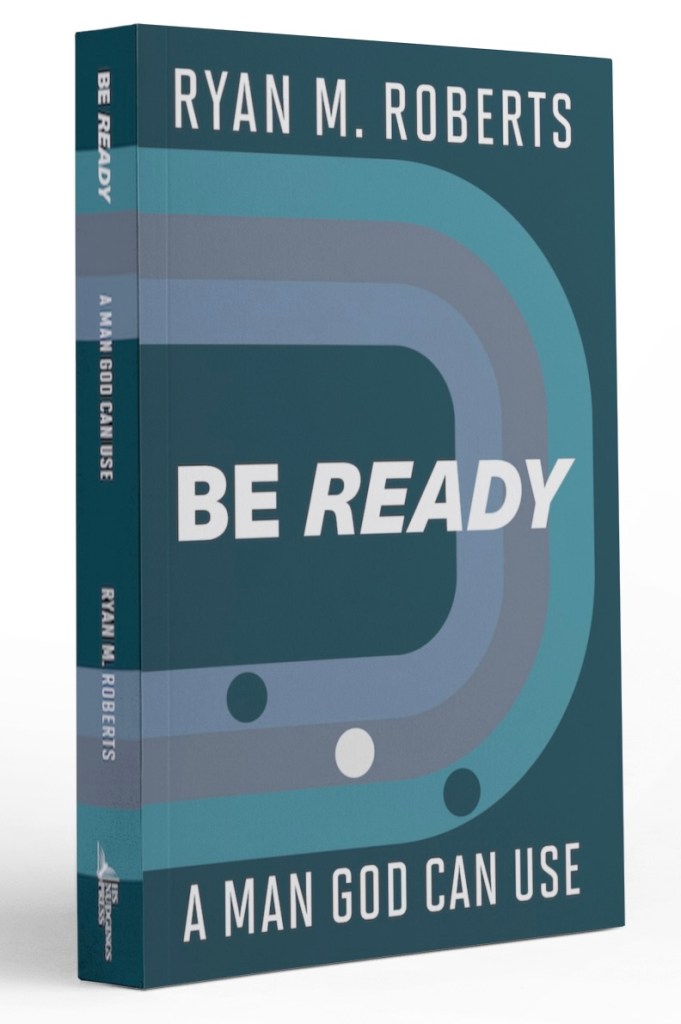

[This week’s Nudging is adapted from my book Be Ready: A Man God Can Use.]
Let us throw off everything that hinders and the sin that so easily entangles.
—Hebrews 12:1, NIV
I had a tumor in my pancreas that was killing me. Not figuratively… physically. The road to getting answers and treatment meant multiple trips to the Mayo Clinic, long days of uncertainty, and prayers that were far more desperate than polished.
There were moments when I was tired, but quitting wasn’t an option. I wanted the doctors to be ruthless. Cut it out. Get it gone. Do whatever it takes, because anything less would be the death of me.
But it’s strange how differently we can treat sin. The things that quietly work against our souls, we learn to live with. We rename them, manage them, and explain them away. “It’s just how I am.” “I’ve always struggled with this.” “It’s not that big of a deal.”
Scripture doesn’t speak that way. It calls it the sin that entangles—the thing that wraps around us, tightens its grip, and trips us up, keeping us from becoming who God is forming us to be.
At some point, we have to be ruthless. Not with others, but with ourselves. The cross is not comfortable, and there is nothing soft about it. It is God’s mercy dealing decisively with what would otherwise destroy us. Jesus didn’t come so we could learn to manage sin. He came to break it.
Scripture goes even further: “Put to death, therefore, whatever belongs to your earthly nature…” (Colossians 3:5, NIV). Not excuse it. Not minimize it. Put it to death. That’s strong language, but it matches the seriousness of what we’re dealing with. God is not asking for a few small adjustments. He is after a new life.
Most of us already know where this lands. We know the pattern, the pull, or the place we go when we’re tired, frustrated, or simply not paying attention. For some, it’s what we scroll through when no one is around. For others, it’s the edge in our words at home, the resentment we quietly carry, or the way we withdraw instead of engage. It may not look like much on the outside, but it isn’t small, because it is shaping us. What we tolerate is what we become.
There comes a moment when honesty has to replace excuse, when we stop saying, “This is just part of me,” and start saying, “This does not belong in me.” That moment matters, because that’s where freedom begins.
I think back to those hospital days. No one suggested leaving part of the tumor behind. No one said I could live with just a little of it. The goal was life, and life required that it be removed.
This is not about being extreme. It’s about being honest and letting the grace of God go deeper than surface change. Because the life we want and who we’re called to become will not be formed by managing what needs to be put to death. Don’t leave anything behind.
Be ruthless—and look to Jesus.


Leave a comment